Yes, termite control can suit a Mumbai apartment building, but the correct response depends on the termite type, the building’s moisture conditions and whether the route extends beyond one flat. You will be able to judge when a flat-level treatment is enough, when a housing society inspection is justified, and which treatment details to demand before approving work.
Key takeaways
- Do not treat every flat until an inspection identifies active termites or shared routes.
- Ask the technician to inspect skirting, door frames, service ducts, and damp areas.
- Match treatment to the termite species, entry route, building structure, and infestation extent.
- Approve a written scope naming treated areas, products, follow-up visits, and resident precautions.
Why Mumbai apartment buildings can need termite control
Termite pest control is suitable for a Mumbai apartment building when inspection finds active termites, concealed shelter routes, or conditions that support repeated attack. A single affected flat does not automatically justify treating every home.
The correct scope depends on whether termites are entering from soil, emerging from shared cavities, or limited to one timber item.
Mumbai’s monsoon moisture increases risk where water remains around foundations, podium gardens, landscaped soil, basements, leaking plumbing, damp service shafts or poorly sealed pipe sleeves. Termites can travel through expansion joints, wall cavities, electrical conduits, door frames, skirting and false ceilings, so visible damage may not mark the colony’s location.
For termite pest control for apartment buildings in Mumbai, ask the inspection to cover:
- The affected flat, adjoining flats and common corridors
- Basements, podiums, gardens and soil touching the structure
- Plumbing and cable penetrations, ducts, expansion joints and service shafts
- Damp walls, leaking pipes, stored timber and concealed ceiling spaces
- Signs of activity around skirting, door frames and built-in cupboards
Treating only one flat can fail when termites cross shared foundations, ducts or adjoining units. A society-wide inspection is suitable when activity appears near common services, several flats, structural junctions or landscaped edges; it can identify areas needing monitoring rather than blanket pesticide application.
For existing buildings, ask for a method aligned with IS 6313 Part 3, not an unspecified “termite spray.”
When one affected flat becomes a society-wide problem
Treating only the affected flat can fail because termites may travel through shared foundations, wall cavities, service ducts, pipe sleeves and adjoining units. A visible skirting trail or damaged door frame identifies activity, not the colony’s route. The society does not need a building-wide pesticide application automatically, but it does need a wider inspection.
Extend the inspection beyond the flat when any of these conditions exist:
- Mud tubes, discarded wings or live termites appear near a common wall, corridor or service shaft.
- The affected flat shares plumbing, electrical conduits or an expansion joint with another unit.
- The building has a basement, podium garden, landscaped soil or timber adjoining the external walls.
- Leaking pipes, wet walls, blocked drainage, planter boxes or persistent condensation remain unresolved.
- Termite activity returns after treatment, or residents in neighbouring flats report similar damage.
Inspectors should check the affected flat, neighbouring units, corridors, service areas, pipe and cable penetrations, expansion joints, basements, podiums and soil touching the building. Concealed routes are easy to miss if the inspection stops at visible furniture.
A written report for termite control for housing societies in Mumbai should mark areas requiring monitoring, treatment or resident access.
Under IS 6313 Part 3, the society can require a defined method and follow-up plan instead of accepting a generic “termite spray.” Arrange access and resident consent before work starts; otherwise the inspection can stop at the first locked door.
What a termite inspection for a Mumbai flat should find
A sound inspection must prove current termite activity, not merely document damaged wood. For a termite inspection for flats in Mumbai, ask for evidence from the flat and the concealed routes connecting it to the building.
The checklist should include:
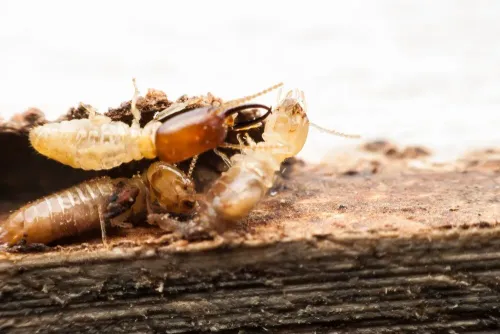
- Live workers or soldiers, fresh mud-tube repairs, and tubes running from soil, masonry or a damp service area towards timber. An inspector should open one section and check whether termites rebuild it, rather than mistake ordinary mud or old repair material for activity.
- Hollow-sounding timber, blistered laminate, sagging skirting and galleries opened carefully, with photographs and locations recorded.
- Fresh pellets or frass, discarded wings, exit holes and newly damaged wood. Old wings, abandoned tubes and historic repairs do not prove a current infestation.
- Leaking pipes, wet walls, planter boxes, blocked drains, condensation, damp shafts and other moisture defects.
- Pipe and cable penetrations, expansion joints, ducts, basements, podiums, adjoining landscaping, corridors and neighbouring flats where shared routes could exist.
Carpenter ants leave clean galleries and coarse sawdust-like frass, but they do not build mud tubes. Wood borers leave round exit holes and powdery frass; mould produces staining, odour or surface growth without insects or galleries.
The report should separate active findings from old damage and identify whether common areas or adjoining flats need monitoring. It should also name each unresolved moisture source, because treatment can fail if wet conditions remain.
Which treatment fits the building and termite type
Choose the treatment by termite type and entry route, not by the size of the building. For apartment termite treatment in Mumbai, inspect the affected flat, service shafts, basements, podium landscaping, pipe penetrations and adjoining common areas before approving a society-wide application.
| Option | What it means | Apartment situation it suits |
|---|---|---|
| Subterranean termite treatment | Targets termites entering from soil or damp concealed routes, using soil or masonry treatment, baiting, or both | Mud tubes from soil, planters, basements, service areas or expansion joints; use when activity links to the building structure |
| Drywood termite treatment | Treats timber that contains a colony, through localised application, removal and replacement, or a specialist whole-unit treatment | Limited activity inside dry furniture, door frames, cabinets or other timber with no soil connection |
| Construction-stage soil treatment | Applies termiticide to foundation soil, plinth filling and other building interfaces before slabs and finishes conceal them | New construction or major reconstruction; it is not a substitute for investigating an existing occupied block |
A subterranean infestation in one flat does not automatically justify treating every apartment. Extend the scope when inspection finds routes through shared shafts, corridors, landscaped soil, basements or adjoining units. Repair leaking pipes, wet walls, blocked drains and planter seepage, or treatment will lose durability.
For an existing building, ask the contractor to state whether the proposal follows IS 6313 Part 3, identify every treated location, name the chemical and concentration, and specify follow-up inspections. A surface “termite spray” cannot replace route-based treatment.
How to approve a safe, properly scoped termite service
Approve a proposal only when it defines the treatment area, evidence for that scope and the safety controls. For an existing block, ask whether the plan follows IS 6313 Part 3 and whether one flat, adjoining units or shared areas require coordinated work.
Request these details before the society signs:
- Treatment method and target locations: flat interiors, common corridors, service shafts, pipe and cable penetrations, expansion joints, basements, podiums, landscaping and damp areas.
- Chemical product name, active ingredient, concentration, label-approved use, application equipment and the operator’s authorisation. Reject kerosene, diesel, unlabelled mixtures and indiscriminate indoor spraying.
- Access dates, resident-consent arrangements, furniture or drilling requirements, evacuation period, re-entry instructions, ventilation and protection of food, pets and aquariums.
- Follow-up inspection date, activity-reporting channel and responsibility for correcting leaks or seepage that sustain termites.
- Warranty wording, including exclusions for concealed areas, pre-existing damage, moisture defects, building movement and resident alterations.
| Compare | Accept | Warning sign |
|---|---|---|
| Method | Location-specific treatment linked to inspection findings | “Whole building spray” without evidence |
| Warranty | Retreatment promise stated separately from damage repair | One vague “guarantee” |
| Access | Written plan for flats and common property | No consent or access schedule |
A written warranty does not prove colony elimination. Organic Facility Services LLP should be compared with other providers on this same written scope, not on the lowest quote for residential termite service in Mumbai.
Frequently asked questions
When is termite pest control suitable for a Mumbai apartment building?
It is suitable when an inspection finds active termites, concealed shelter routes, or moisture and structural conditions that support repeated attack.
Does one affected flat require termite control for the whole housing society?
No. One affected flat does not automatically justify society-wide treatment. Wider action becomes relevant when termites use shared ducts, wall voids, plumbing routes, adjoining units, or common structural areas.
What should a termite inspection for a Mumbai flat include?
The inspection should check skirting, door and window frames, cupboards, concealed pipe and electrical routes, service ducts, damp areas, cracks, and signs such as mud tubes, discarded wings, hollow timber, or live insects.
How can a society approve a safe termite treatment service?
Approve a written plan that identifies the termite evidence, treated locations, product and application method, follow-up schedule, resident precautions, exclusions, and responsibility for access to common areas and flats.
Keywords