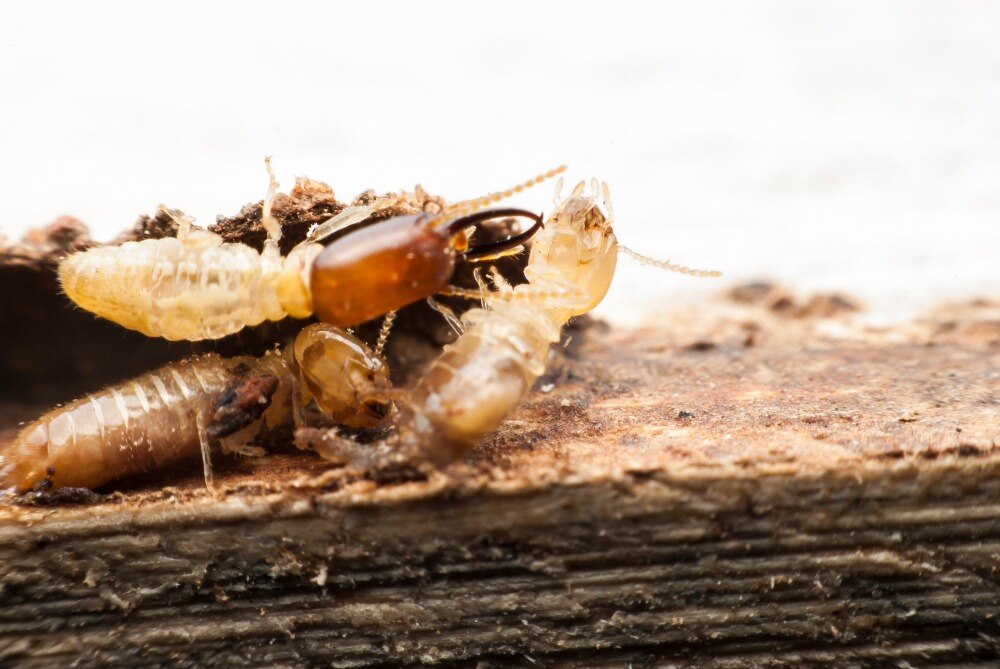
Termites can remain active behind skirting, inside walls, below floors or around plumbing routes even when you see only one damaged cabinet or a few wings. You will learn how to confirm the signs, distinguish termites from look-alike damage, compare treatment methods and check whether a proposed service actually addresses the colony and its entry route.
Key takeaways
- Look for mud tubes, frass, discarded wings, hollow wood, or live cream-coloured termites.
- Ask the inspector to identify the species and trace its entry route.
- Compare treatment scope, follow-up visits, warranty terms, and chemical details—not just price.
- Keep occupants away until the technician confirms treated areas are safe to re-enter.
How to confirm termites before booking treatment
A termite inspection is justified by mud tubes along skirting, walls or foundations, hollow-sounding wood, discarded wings near windows or lights, pellet-like frass, blistered paint, sagging or weakened surfaces, or live cream-coloured termites. Missing mud tubes do not rule termites out: activity may sit inside a wall, floor void, cabinet or concealed service route.
- Photograph every sign without scraping, breaking or spraying it. Disturbed tubes and debris can erase evidence.
- Compare the insect carefully. Carpenter ants have a narrow waist, elbowed antennae and evenly sized wings. Wood-boring beetles leave small round exit holes and powdery frass.
- Check competing explanations. Leaks, water staining and soft plaster point towards moisture damage; ordinary cracks become more suspicious when you find active insects, galleries or repeated debris.
- Record the room, date, nearby leak or moisture source, and whether wings or debris reappear. Note signs in kitchens, bathrooms, cabinets and service openings.
- Request termite pest control in Vile Parle that starts with inspection, not an automatic spray. Ask the technician to examine concealed routes even when no tube is visible.
Do not seal, clean or fill the evidence before the visit. A visible insect or damaged patch identifies a location, not necessarily the colony’s entry route.
What a professional inspection should cover
1. Start with a route through the property, not with automatic treatment of the first room showing damage. Check skirting, door and window frames, kitchen cabinets, bathrooms, plumbing penetrations, electrical conduits, false ceilings, lofts, furniture, wall-floor joints and external soil lines.
2. Investigate concealed activity even when mud tubes are absent. Tap timber, probe vulnerable edges, compare hollow sounds, trace moisture, inspect service openings, lift accessible covers and examine old treatment holes or repair points. Record live insects, galleries, debris, dampness and weakened material rather than relying on one sign.
3. In apartments and commercial premises, extend the inspection to service shafts, adjoining flats, basements, landscaped soil, expansion joints and shared plumbing routes. Coordinate with building management before drilling, treating common soil, isolating areas or investigating damage that crosses property boundaries; otherwise a shared entry route can remain active.
4. Require a written report that maps evidence, suspected entry routes, moisture defects and areas needing access or isolation. It should identify blocked cabinets, false-ceiling sections, stored furniture or electrical and plumbing services that require preparation before treatment. Repair priorities must be recorded separately from treatment points.
Subterranean or drywood: why the diagnosis changes the plan
Diagnosis changes the treatment plan: subterranean termites follow soil, dampness and hidden building routes, while drywood termites remain inside relatively dry timber or furniture.
| Type | Typical route | Inspection and treatment focus |
|---|---|---|
| Subterranean | Foundations, cracks, construction joints, plumbing penetrations, utility conduits or damp soil | Extend checks beyond the affected room to perimeter soil, masonry, floors and shared structural routes |
| Drywood | Concealed galleries inside relatively dry wood, furniture and isolated timber | Inspect lofts, door frames, cabinets, furniture and other wooden components; do not assume a soil barrier will solve it |
Damp walls, leaking pipes, poorly ventilated voids and standing water can support concealed activity. Repair those defects, or termites may persist after treatment.
Before approving a termite pest control service in Vile Parle, ask the technician to:
- Identify the evidence supporting the diagnosis, such as mud tubes, live insects, frass, hollow timber or galleries.
- Confirm whether furniture is included and explain how adjacent rooms, shared walls, shafts and service routes will be checked.
- Distinguish cosmetic damage from lost structural timber. Have suspected structural damage assessed by a qualified building or timber professional before replacing wood.
- Explain why the proposed plan fits subterranean or drywood activity; a spray limited to visible skirting cannot address a concealed colony.
Which termite treatments address the colony and entry route
Choose treatment by the route termites use, not by the room where you first see them. A colony can remain below floors, inside walls or beyond the treated room after exposed insects and skirting have been sprayed.
| Option | Main target | Trade-off or limitation |
|---|---|---|
| Soil or perimeter treatment | Foundation routes and external edges | Requires access to soil, plinths or perimeter surfaces |
| Drilling and injection | Concealed joints and service paths through masonry, floors or plinths | Creates dust and noise; risks water or electrical lines |
| Wood treatment | Exposed, affected timber | Does not reach unrelated hidden routes |
| Foam or dust | Selected wall, ceiling or furniture voids | Use only where the product label permits the application |
| Bait system | Foraging termites and colony transfer | Cellulose bait containing termiticide needs monitoring and replenishment, so it is slower than knock-down treatment |
| Targeted surface application | A limited exposed surface | Narrow role; it cannot address concealed colonies |
Drilling holes should be plugged afterward and marked on a treatment map. Ask the applicator to identify every treated area and every route left unaddressed.
A search for termite pest control spray vile parle should not end with a product sprayed on visible insects or exposed skirting. The active ingredient, concentration, application rate and permitted surface must come from the product label; a generic “strong chemical” is not a treatment specification.
What to check before occupants return and after treatment
Do not let occupants return because the smell has faded. Re-entry depends on the product label and the applicator’s instructions.
1. Before treatment, request the product label and safety data sheet. Record the active ingredient, dilution or application rate, treated locations, odour and staining risk, indoor-use instructions, ventilation requirement, re-entry time, and cleanup or disposal method.
2. Confirm precautions for children, pets, aquariums, food-preparation areas, wells and drains. Reject unlabelled kerosene, diesel and household mixtures; they create fire, poisoning and surface-contamination risks without a defined application rate.
3. Remove food before work. Cover or relocate belongings only as instructed, arrange access to cabinets, lofts and service areas, and report leaking pipes, damp walls or recent drilling before chemicals are applied.
4. After treatment, ventilate for the stated period and keep everyone out until the label permits re-entry. Ask the applicator to seal injection holes and give you a map showing every treated area.
5. Repair leaking pipes, damp wall bases, blocked drainage and standing water. These defects preserve concealed routes and can support renewed activity after treatment.
6. Obtain the inspection or monitoring interval in writing, including the evidence that counts as recurrence. A quick drop in visible termites does not prove colony elimination.
How to compare a Vile Parle service quote
Compare quotes for termite pest control in Vile Parle by scope and written commitments, not by spray names or promises. Reject “100% removal” or lifetime guarantees unless the provider defines them in writing.
- Require the inspection report to state the diagnosis, evidence, treatment map, product name, active ingredient, label-based dilution or application rate, preparation instructions, re-entry rules and treated areas.
- Ask for follow-up dates, the definition of recurrence, retreatment terms, exclusions and the person responsible for monitoring.
- Confirm whether drilling, hole plugging, monitoring visits and ladders or other access equipment are included.
- Ask Organic Facility Services LLP the same questions and request the written product and follow-up details before booking a termite pest control service Vile Parle.
| Scope | Confirm it covers |
|---|---|
| One room | Floors, skirting, walls and furniture inside that room |
| Building routes | Shared walls, soil lines, shafts, plumbing paths and adjoining risk areas |
| Repairs | Moisture defects, leak-related work and structural timber referrals |
A quote limited to visible wood is incomplete. Keep bird netting and invisible-grill work separate: they provide physical exclusion or fall protection, not termite barriers. Record and seal every new facade or balcony penetration.
Related items
Termite Control Service Termite are the number one pest when come to structural damage to home. View service → |
 | Termite Pest Control Service Termite control service is a professional pest management solution designed to detect, eliminate, and prevent termite infestations in residential and... View product → |
Frequently asked questions
How can you confirm termites before booking treatment?
Check for mud tubes, hollow-sounding wood, discarded wings, pellet-like frass, blistered paint, weakened surfaces, or live cream-coloured termites. Hidden activity can exist without visible mud tubes.
What should a professional termite inspection cover?
The inspection should check skirting, walls, foundations, woodwork, cabinets, floor voids, concealed service routes, and other areas where termite activity can remain hidden.
Why does the treatment change for subterranean and drywood termites?
Subterranean termites require attention to soil or building entry routes and the colony’s access path. Drywood termites remain inside infested timber, so the treatment must target affected wood and concealed galleries.
How should you compare a Vile Parle termite service quote?
Compare the inspection findings, identified termite type, treatment areas, entry-route work, product details, follow-up visits, warranty conditions, preparation instructions, and re-entry guidance.
Keywords