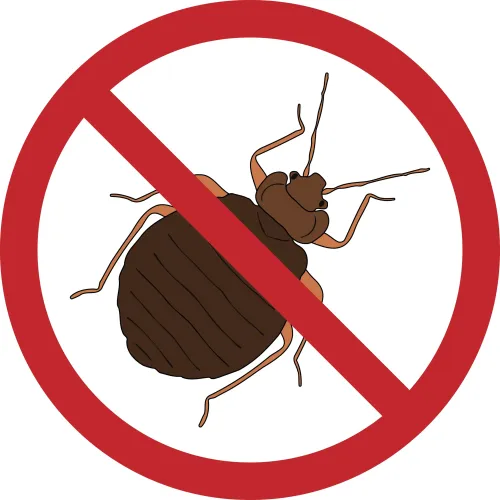
A routine spray is designed for exposed pests such as cockroaches, ants, mosquitoes, flies and spiders; it is not automatically a termite treatment. By separating the signs, treatment methods, product claims, disruption and quotation details, you can choose a suitable service for an occupied Mumbai workplace.
Key takeaways
- Choose termite treatment for wood, soil, wall or foundation evidence—not routine surface insects.
- Ask for the active ingredient, registration details and safety instructions behind “herbal” claims.
- Compare quotations by inspection findings, treatment method, access work, follow-ups and warranty terms.
- Demand treatment maps, product records, photographs and written warranty conditions after the job.
When should a Mumbai business choose termite treatment instead of general pest control?
Use a general pest control service for surface activity from cockroaches, ants, mosquitoes, flies or spiders. Its routine spray usually provides surface knockdown and residual control.
Choose a termite inspection and termite pest control service when you find mud tubes, hollow-sounding timber, discarded wings, termite frass, damaged skirting, blistered paint, recurring winged insects, or unexplained activity around door frames and floors. These signs point to a wood-associated or soil-associated colony, not just insects resting on a surface.
Do not accept “all pests” as proof that a quotation includes termite work. Ask whether it covers:
- Termite inspection
- Soil or wall-floor junction treatment
- Wood treatment
- Drilling and injection
- Baiting
- Follow-up visits
- A written warranty
If activity enters from landscaped soil, planter boxes, a basement or a plumbing penetration, treat that route instead of repeatedly spraying visible insects. Correct leaks and dampness too.
Herbal pest control or general pest control service in mumbai is a comparison question, not proof that either option suits the infestation.
| Option | What it addresses | Choose it when |
|---|---|---|
| General pest control | Surface pests and residual control | You see cockroaches, ants, mosquitoes, flies or spiders without termite signs |
| Termite treatment | A concealed wood- or soil-associated colony | You find structural clues, recurring winged insects or activity along floors and frames |
What should the inspection cover, and which termite method matches each finding?
Inspection must cover every place where termites can hide, feed or enter—not just the room with visible damage. Give the inspector access to:
- Storage rooms, wooden door frames, skirting, false ceilings, electrical and service shafts
- Pantry areas, basements, landscaped soil, planter boxes and damp balconies
- Every point where plumbing penetrates a wall
Check leaks, bathroom moisture, blocked drains, cracks at floor-wall junctions and poorly drained external soil. Concealed moisture can sustain activity after visible termites disappear, so correcting the source belongs in the termite pest control service plan.
| Method | Finding | Matching use |
|---|---|---|
| Spot treatment | Confirmed, isolated timber or skirting activity | Treat the limited affected area |
| Wood treatment | Galleries or frass in one wooden element | Treat that element directly |
| Drilling and injection | An accessible wall-floor void or concealed perimeter route | Deliver treatment along the identified path |
| Soil treatment | Entry from external soil, foundations or planter areas | Treat the route outside or beneath the building |
| Baiting and monitoring stations | Need for colony-level evidence through repeated inspections, or drilling is unsuitable | Monitor feeding and activity over time |
Require photographs, affected rooms, moisture sources, entry points, treatment locations and inaccessible areas in the report. Ask why the selected method matches the evidence; reject a standard package that offers no site-specific explanation.
What does “herbal” mean on a termite product label?
Treat “herbal” as a marketing description until the provider names the product, active ingredient or botanical extract. Herbal pest control does not mean chemical-free, non-toxic or suitable for every termite infestation.
Ask for:
- Product name, manufacturer, concentration, batch number and expiry date
- Application site, dilution, label directions and safety data sheet
- Product-specific re-entry instruction and evidence supporting termite or colony control
Neem, eucalyptus, citronella and other plant-derived oils can irritate skin, trigger respiratory symptoms, affect cats and harm aquatic organisms.
| Option | Target pest | Residual effect and odour | Re-entry, staining and exposure | Colony-control evidence |
|---|---|---|---|---|
| Botanical product | Named termite target only if the label says so | Confirm duration and odour; low odour is not non-toxic | Follow the label; check staining and worker/customer exposure | Require product-specific evidence |
| Conventional termiticide | Termites at labelled soil, wood or wall sites | Usually defined by the label; check odour and residue | Check re-entry, staining and occupied-area controls | Look for treated entry routes and follow-up |
| Bait system | Termite colonies through monitored stations | Little spray odour; control depends on station uptake | Follow station-access and exposure instructions | Repeated inspections provide colony evidence |
A plant extract is not automatically equivalent to a registered termiticide or bait system. Do not use a botanical treatment alone when activity is subterranean, damage is extensive, wall voids are inaccessible or termites enter from outside soil. Keep people, pets, food and utensils away exactly as directed; never apply a universal “two-hour” rule.
How should an occupied business plan the work and compare the quotation?
Require a written workflow before approving work: inspection and identification, itemised quotation, preparation instructions, application, closure of treated areas, label-based re-entry, follow-up inspection, monitoring and a premises-manager report.
- Inspection must identify pests, entry routes, moisture sources, treatment locations and inaccessible areas.
- Preparation must cover food removal, cupboard access, false-ceiling access, drilling-dust control, electrical isolation where needed, staff relocation and customer-area closure.
- Application records must name the product, active ingredient, dilution and treated rooms.
- Closure instructions must state when each area reopens and what label-based re-entry time applies.
- Follow-up documents must record activity, monitoring results and corrective work.
Ask how the provider will patch injection holes and protect records, equipment and stock. Keep separate line items for general pests, termites, rodents, leaks, repairs and bird exclusion.
To answer “how much does a pest control cost,” compare scope rather than a headline rate.
| Option | Typical quoted basis | What changes the total |
|---|---|---|
| Small general visit | ₹800–₹2,500 | Pest, area, access, product and tax |
| Commercial contract | Area, visits and product | Frequency, documentation and tax |
| Post-construction termite work | About ₹5–₹15 per square foot | Kitchens, furniture, false ceilings, external soil, floors and patching |
A search for “general pest control service near me” is not a quality check. Consider Organic Facility Services LLP alongside other Mumbai providers only after comparing inspection findings, product documents, treatment map, follow-up schedule, exclusions and invoice details. Do the same before appointing a termite pest control service.
Related items
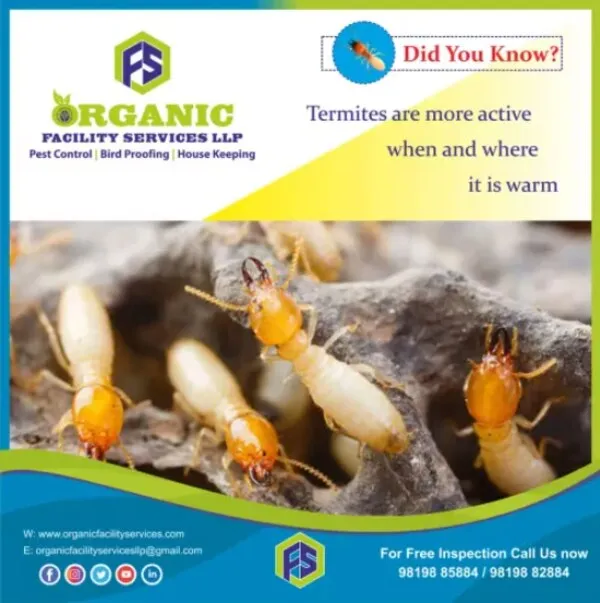
Termite Control Service Termite are the number one pest when come to structural damage to home. View service → |
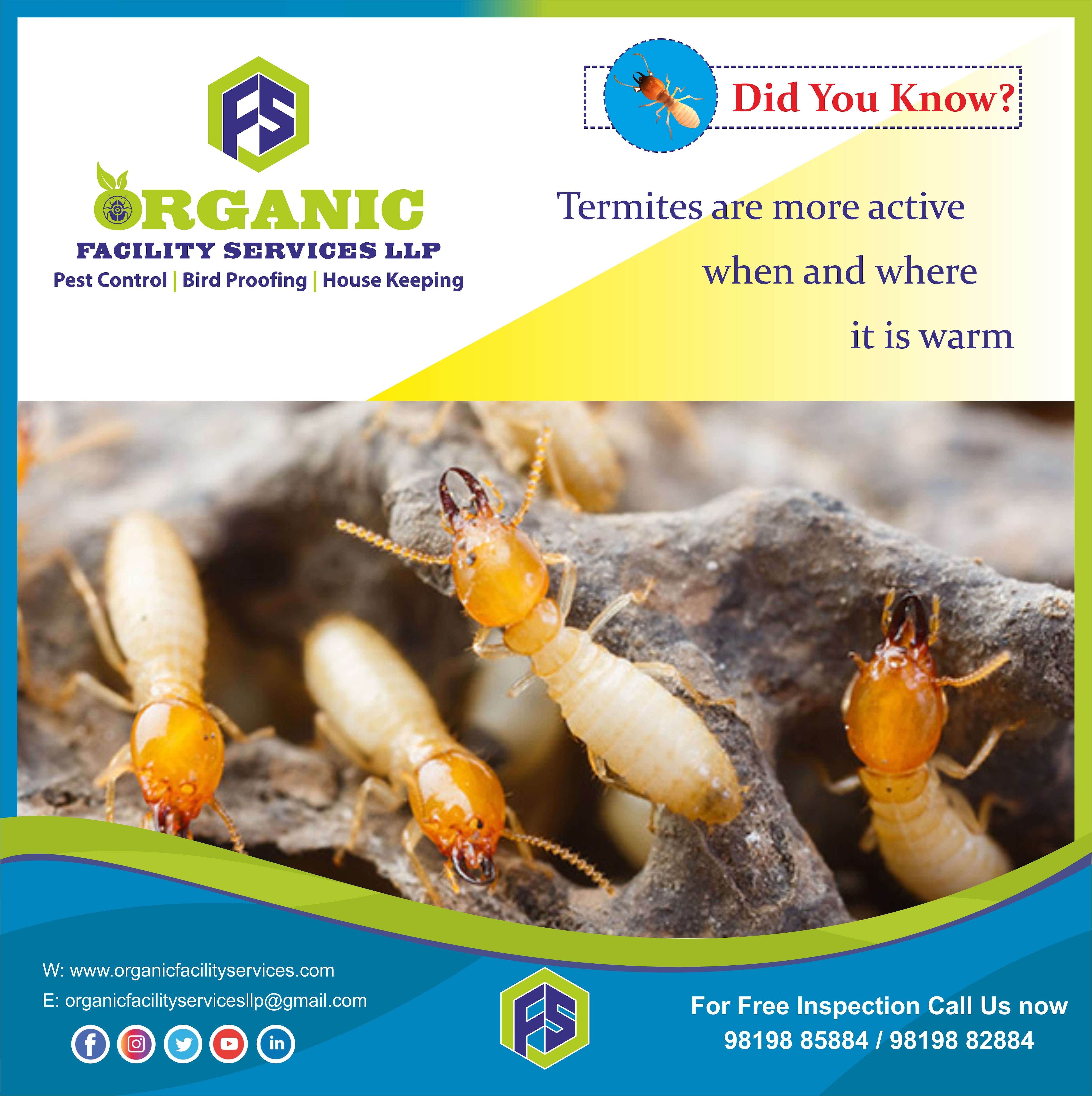 | Termite Pest Control Service Termite control service is a professional pest management solution designed to detect, eliminate, and prevent termite infestations in residential and... View product → |
What evidence should you demand after treatment and during the warranty?
Do not close the job without a service file. Keep the invoice, product label or safety data sheet, batch details, dilution, application areas, technician information, photographs, re-entry instructions and follow-up dates.
Ask a provider found through “general pest control service near me” for:
- Its applicable commercial pest-control licence, trained applicators, insurance and written chemical records.
- The termite pest control service report identifying treated rooms, external soil, entry routes, inaccessible areas and moisture defects.
- A product name, active ingredient, label directions and application record; “herbal” alone proves nothing.
Read the warranty as a contract, not a promise. It must state whether it covers retreatment only or damage as well, its duration, included rooms and external soil, annual inspection requirements, and exclusions for leaks, renovations and untreated adjoining premises.
If baiting is used, confirm the exact monitoring-station inspection interval and require reports on fresh mud tubes, live termites, moisture defects and inaccessible areas. Repair leaking plumbing, damp service shafts, planter drainage and wall cracks alongside treatment, or recurrence can follow.
Judge success by reduced activity, no new entry routes and documented follow-up—not by dead insects after one visit. A general visit does not automatically include bed-bug repeat treatment, rodent proofing, bird netting or invisible-grill safety work; require each as a separate scope item.
Frequently asked questions
When should a Mumbai business choose termite treatment instead of general pest control?
Choose termite treatment when you find mud tubes, hollow-sounding timber, discarded wings, live termites, damaged wood or soil entry points. Use general pest control for surface activity from cockroaches, ants, mosquitoes, flies or spiders.
What should a termite inspection cover?
Ask the technician to inspect wooden frames, skirting, false ceilings, service ducts, electrical and plumbing penetrations, storage areas, expansion joints, basements, landscaped soil and building perimeters. Request photographs and a written map of findings.
What does “herbal” mean on a termite product label?
“Herbal” is not enough to identify a treatment. Ask for the complete product name, active ingredient, concentration, manufacturer, batch number, label directions, registration or licence details and re-entry instructions.
How should an occupied business compare termite treatment quotations?
Compare the inspection findings, treatment method, drilling or injection points, furniture and stock protection, downtime, follow-up visits, exclusions, chemical records and warranty terms—not only the total price.
What evidence should you demand after termite treatment?
Request an invoice, product and batch details, treated-area map, photographs, application record, safety instructions, follow-up schedule and written warranty conditions, including exclusions and the process for reporting renewed activity.
Keywords